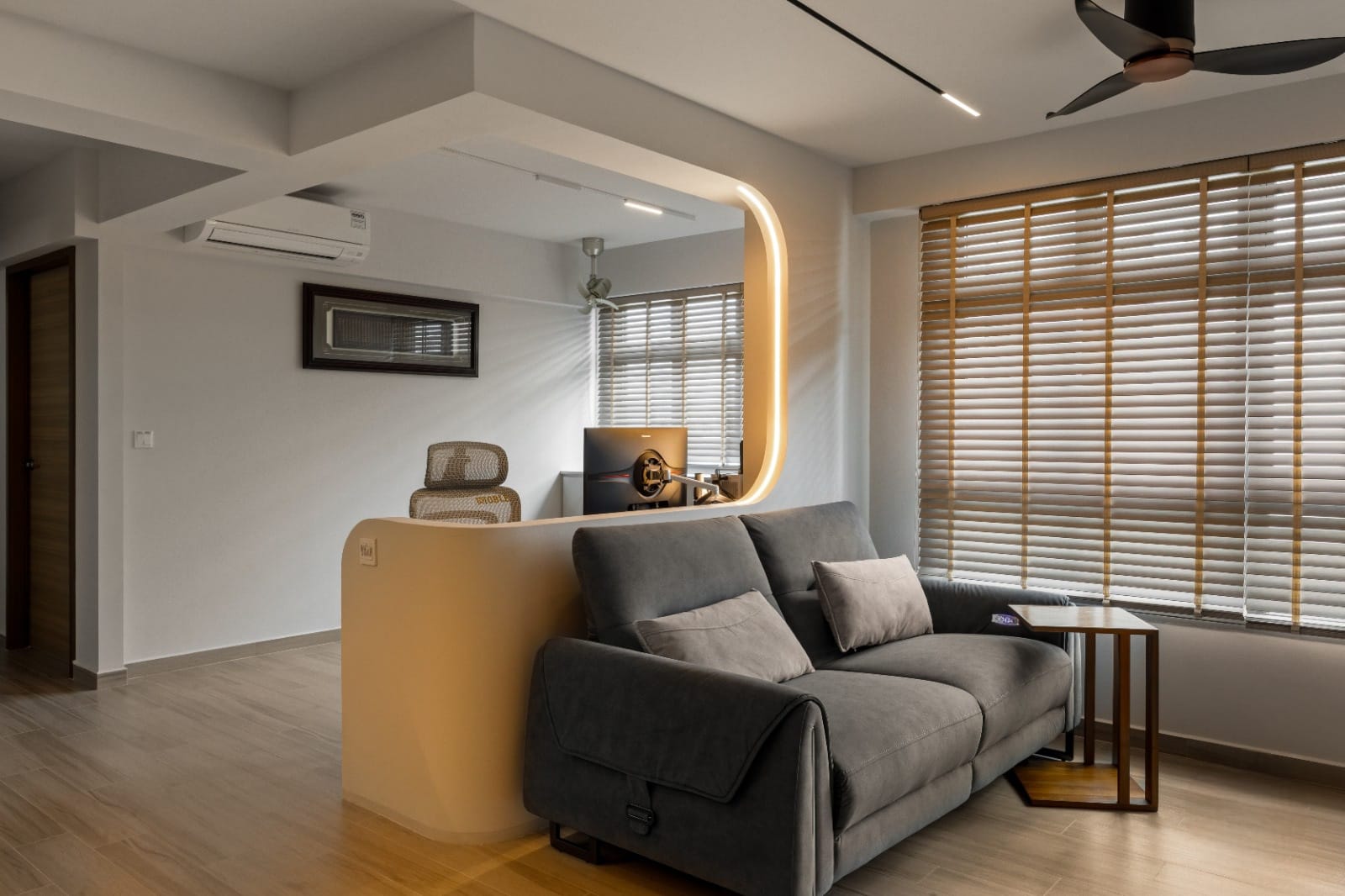
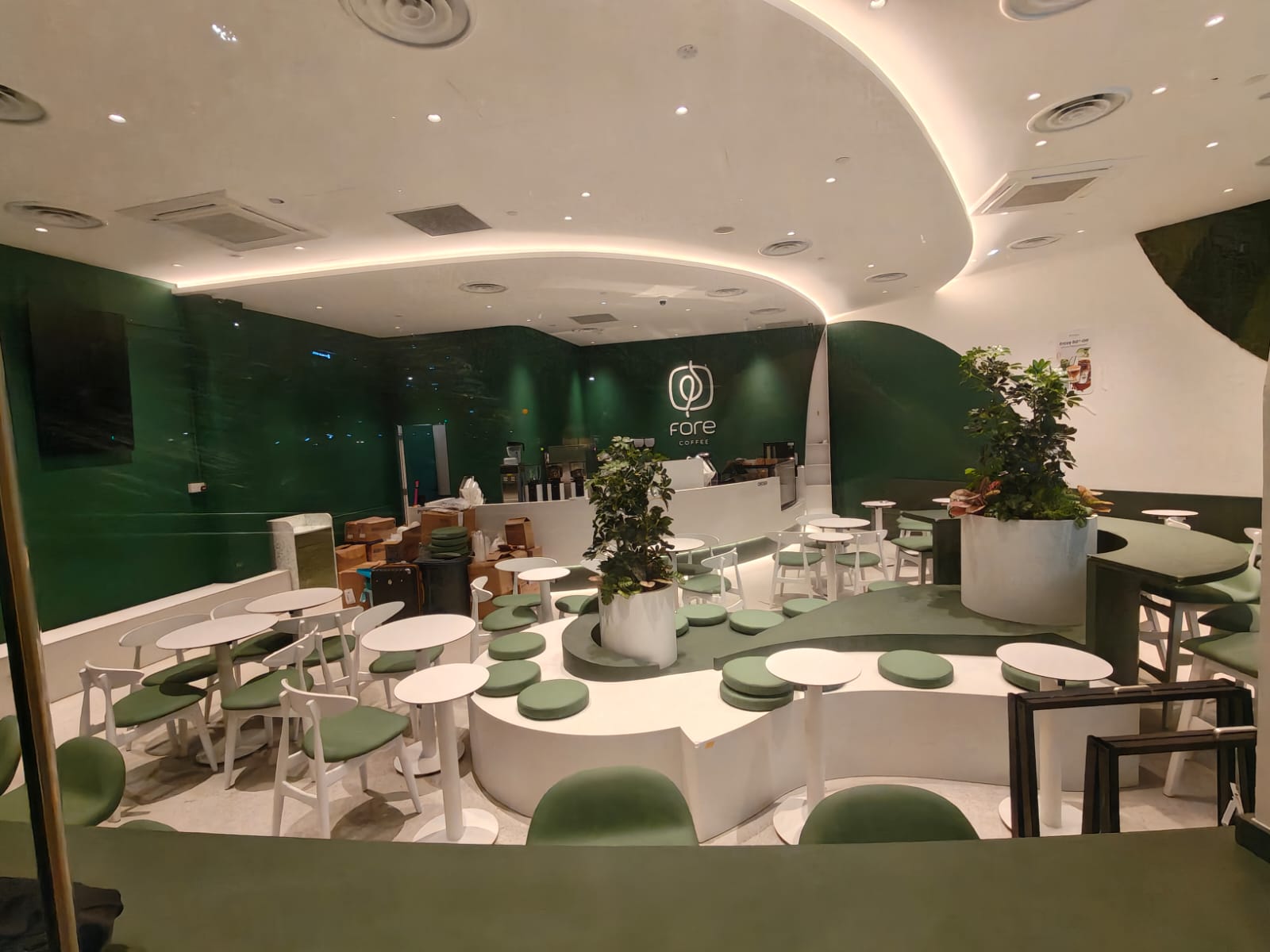
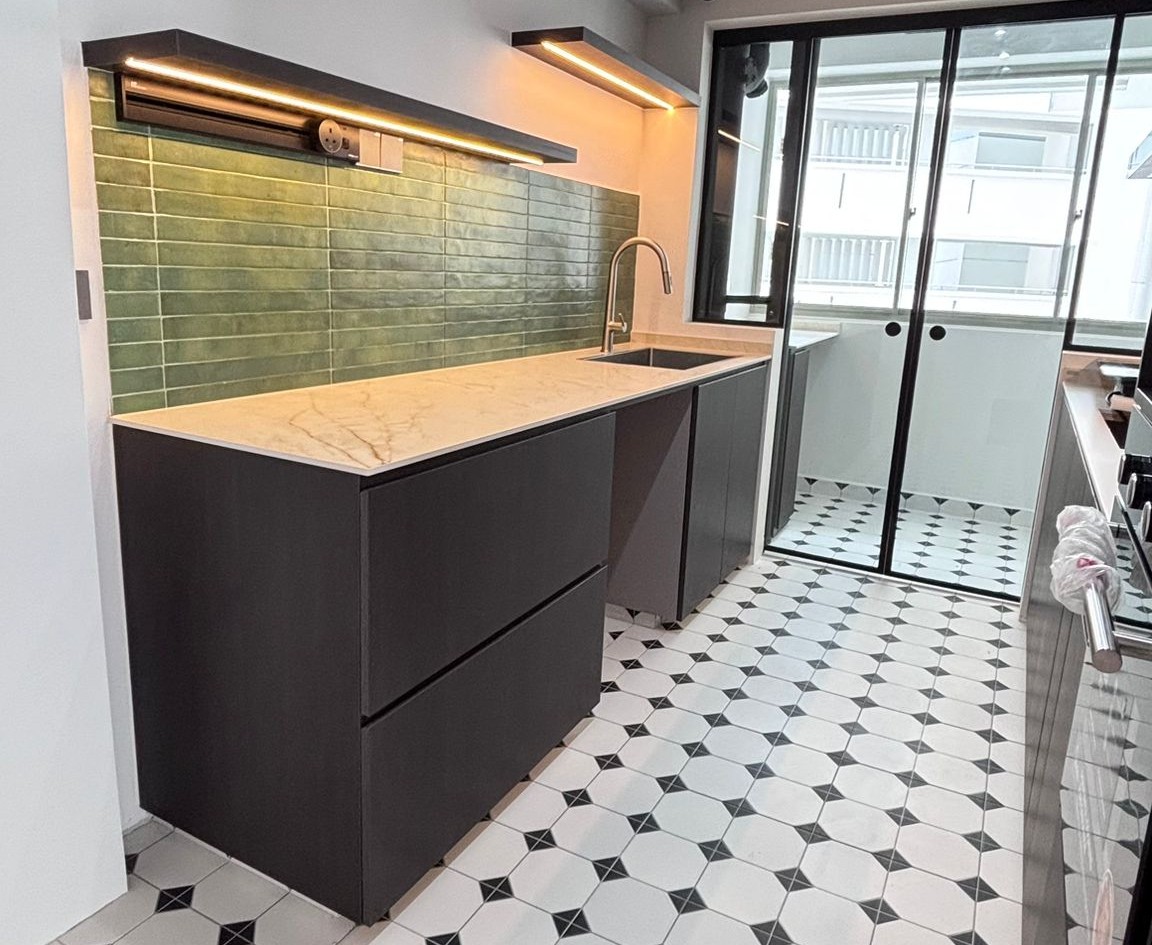
The Renovation Dilemma – Hope vs. Certainty
You’ve saved for months, perhaps years. You’ve collected countless inspiration photos. You’ve even selected a renovation contractor. But as you stare at the 2D blueprint of your future home, a familiar anxiety creeps in: “Will it actually look like what I imagine?”
This uncertainty is the universal renovation dilemma. Traditional flat blueprints—with their technical lines and symbols—offer little emotional connection to your future space. They leave critical questions unanswered about proportions, flow, and atmosphere that could make or break your condo renovation or HDB transformation.
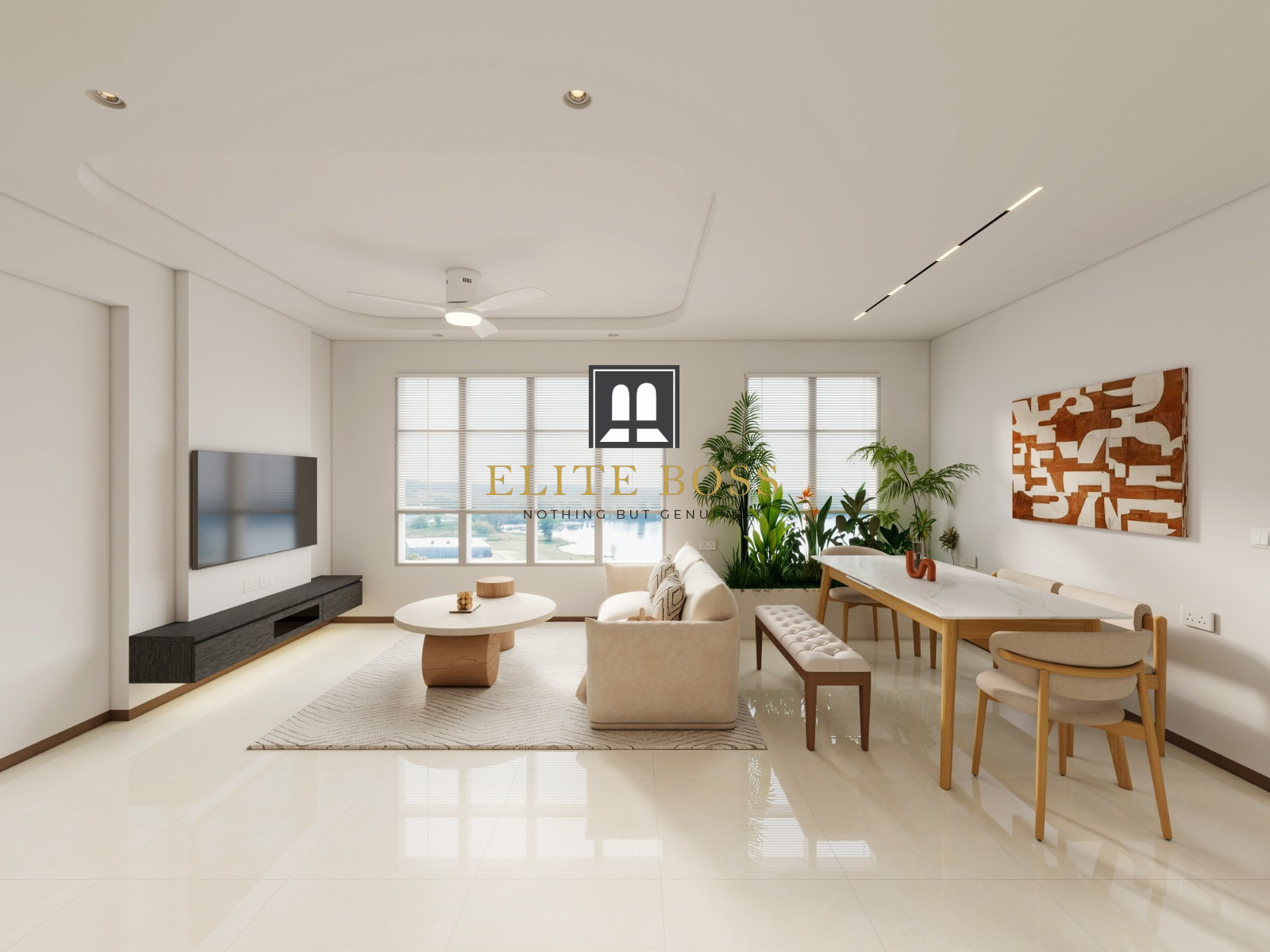
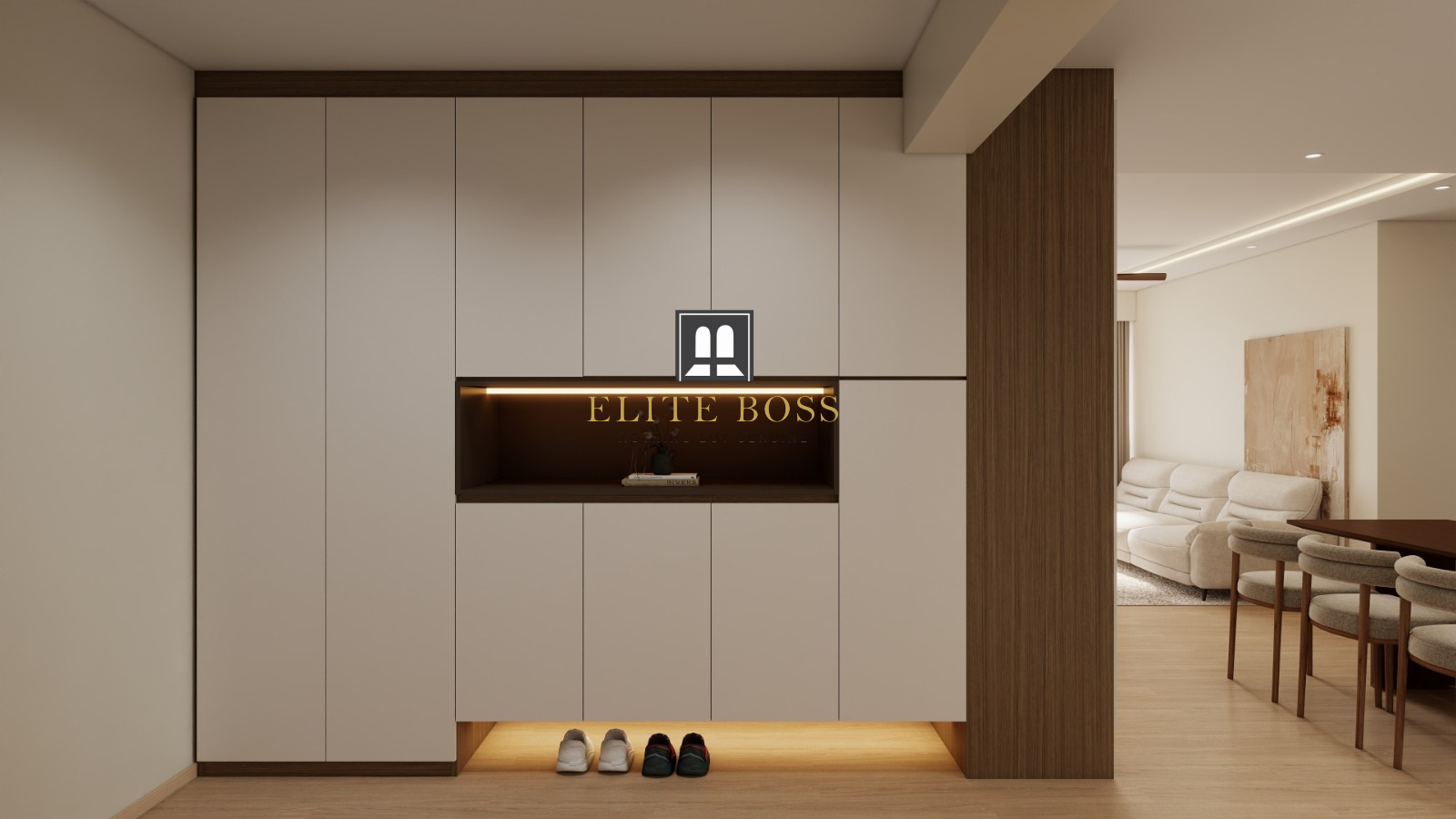
Enter 3D visualisation: the bridge between technical planning and experiential reality. By transforming flat drawings into immersive, photorealistic models, today’s interior design through 3D drawing technology eliminates guesswork and builds confidence before the first wall comes down.
In this article, we’ll explore how 3D visualisation revolutionises the renovation journey, streamlines decision-making, and ultimately delivers spaces that truly match your vision—not just your hope.
Beyond the Blueprint: Why 2D Plans Fall Short in Renovations
The Challenge of Spatial Understanding
For most homeowners, architectural blueprints might as well be written in another language. The technical symbols, scale references, and elevation markers require trained interpretation. Even with meticulous measurements, critical questions remain unanswered:
- Will that kitchen island leave enough walking space?
- How will natural light interact with the new layout?
- Will the furniture arrangement feel crowded or spacious?
- Does the ceiling height in this HDB allow for that pendant light?
These uncertainties are particularly problematic in space planning for compact Singapore homes, where every centimetre counts. A miscalculation in a blueprint can lead to cramped walkways or impractical layouts that compromise your daily comfort.
From Confusion to Clarity with 3D
3D renovation design transforms abstract concepts into tangible experiences. The difference is comparable to reading a map versus walking through a city—one provides technical information, while the other offers genuine experience.
With 3D visualisation, homeowners can:
- Experience actual room proportions and spatial relationships
- Understand how light interacts with different surfaces throughout the day
- See how furniture pieces fit within the space
- Evaluate ceiling heights, door clearances, and traffic flow
This clarity is why interior design with 3D drawing techniques has become standard practice among leading Singapore design firms, particularly for projects where spatial optimisation is crucial.
The Four Pillars of a Successful Renovation, Powered by 3D Visualisation
3D visualisation transforms abstract concepts into tangible experiences, allowing for intelligent space planning that optimises even the most challenging layouts.
Pillar 1: Visualise Before You Demolish (Enhanced Realism)
Perhaps the most compelling benefit of 3D visualisation is the ability to experience your new space before construction begins. This includes:
- Seeing exact material textures and how they interact with lighting
- Experiencing colour combinations and finishes in context
- Understanding how new layouts will function in daily use
- Visualising the completed space from multiple angles
For condo renovation projects where permanent structural changes are limited, this visualisation becomes even more valuable—helping you maximise impact within constraints.
Pillar 2: Eliminate Costly Surprises (Risk & Cost Reduction)

Renovation surprises nearly always translate to additional costs. The detailed planning enabled by 3D visualisation helps prevent common errors:
- Furniture that doesn’t fit the intended space
- Insufficient clearance for doors or cabinets
- Poor lighting placement creating unwanted shadows
- Layout issues that disrupt natural movement patterns
For homeowners investing in a comprehensive home renovation package, this risk reduction represents significant potential savings—both in materials and labour for corrections.
Pillar 3: Streamline Decisions & Communication (Improved Collaboration)
Miscommunication between homeowners, designers, and contractors is the leading cause of renovation dissatisfaction. 3D visualisation creates a common visual language that:
- Ensures everyone sees the same end goal
- Reduces interpretation errors between design intent and execution
- Accelerates approval processes with clear visual references
- Prevents costly mid-project changes due to misunderstandings
When your interior design contact can show contractors exactly what you’ve approved, execution becomes far more precise.
Pillar 4: Experiment with Zero Risk (Design Flexibility)
Traditional renovation requires committing to design decisions before seeing the results. 3D visualisation flips this model by allowing experimentation with:
- Multiple layout options with furniture placement
- Various material and colour combinations
- Different lighting scenarios and fixture placements
- Alternative design styles from modern interior design to Scandinavian or industrial
This flexibility empowers homeowners to make confident decisions rather than hopeful guesses, bringing innovative renovation ideas in Singapore to life without commitment until you’re certain.
Want to see your future home before it’s built? Contact Elite Boss Interior Design for a 3D design consultation today.
The Process: How Your Renovation Goes from Idea to Photorealistic Reality
Step 1: Capturing the “As-Is” Space
The journey begins with precise measurement of your existing space, documenting architectural features, windows, doors, and fixed elements. For condo renovation projects, this includes noting structural columns and other immovable constraints.
Step 2: Building the Digital Foundation
Using specialised software, designers create a digital framework that accurately represents your current space—the blank canvas for your renovation vision.
Step 3: Modelling the Transformation
Your designer then implements your renovation plans digitally, adding new walls, openings, built-ins, and major elements that define the new layout.
Step 4: Applying the Finishes (Texturing & Lighting)
This crucial step brings your space to life with photorealistic materials, colours, and lighting. Here’s where interior design visualised through 3D drawing truly shines, as you can see exactly how different finishes will look in your space.
Step 5: The Final Render & Virtual Walkthrough
The completed 3D model is rendered into high-resolution images or interactive walkthroughs that let you experience your future space from any angle.
Comparison: 2D vs. 3D in Renovation Planning
| Aspect | Traditional 2D Blueprints | 3D Visualisation |
| Spatial Understanding | Limited to trained professionals | Intuitive for anyone |
| Material Visualisation | Symbols and references only | Photorealistic textures and finishes |
| Lighting Effects | Cannot be visualised | Accurate light behaviour and shadows |
| Problem Detection | Difficult before construction | Identified in planning phase |
| Client Confidence | Uncertain until completion | High from early stages |
| Change Management | Costly and time-consuming | Quick and inexpensive digitally |
The Future is Here: Taking Renovation Planning to the Next Level
Immersive Experiences with Virtual Reality (VR)
The evolution of 3D renovation design continues with VR technology, which allows clients to literally walk through their unbuilt spaces. This immersive experience offers unprecedented benefits:
- True sense of scale and proportion
- Ability to “feel” ceiling heights and room transitions
- Interactive elements like opening cabinets or turning on lights
- Emotional connection to the space before construction
This technology is particularly valuable for condo renovation projects where space optimisation is critical.
Custom Solutions with 3D Printing
Beyond visualisation, 3D modelling enables custom fabrication through 3D printing. Innovative Singapore design firms are beginning to offer:
- Custom furniture pieces tailored to exact specifications
- Unique decorative elements that perfectly complement the space
- Bespoke fixtures that solve specific design challenges
- Prototype testing of complex built-in elements
These advancements make truly personalised modern interior design accessible to more homeowners.
Conclusion: Renovate with Confidence, Not Guesswork
The journey from blueprint to reality no longer requires a leap of faith. 3D visualisation transforms renovation from an anxiety-inducing gamble into a confident, controlled process. It eliminates the gap between what you imagine and what you get, ensuring that your investment delivers the home you truly want.
Whether you’re planning a complete home renovation package or updating specific areas, 3D visualisation provides the clarity, confidence, and control that makes renovation stress-free and successful.
In Singapore’s competitive property market, where every square foot must be optimised, this technology is the foundation of smart renovation ideas that Singaporean owners should demand from their design teams.
Need help deciding between 3D or traditional visualisation for your condo renovation project? Contact Elite Boss Interior Design today. With over 20 years of experience, our design team can guide you toward the most effective visualisation solution for your specific needs. Visit our website or use our interior design contact form to start creating your dream space.
Frequently Asked Questions (FAQ)
Q1: How accurate are 3D visualisations for a renovation?
A: When based on precise on-site measurements, 3D visualisations are extremely accurate, reflecting exact dimensions, lighting conditions, and material properties. The final result should look remarkably similar to the 3D renderings.
Q2: Is 3D visualisation worth the cost for a smaller renovation project?
A: Yes, even for smaller projects, 3D visualisation prevents costly mistakes and ensures optimal use of limited space. The investment typically pays for itself by eliminating expensive mid-project changes and design errors.
Q3: How long does it take to create a 3D model of my renovation?
A: Depending on project complexity, a detailed 3D model takes 3-14 days to complete. Simple spaces like a bathroom might be quicker, while comprehensive condo renovation models take longer due to the detailed finishes and multiple rooms.
Q4: Can I make changes to the 3D design once I see it?
A: Absolutely. The primary advantage of 3D modelling is the ability to make adjustments before construction begins. You can experiment with different layouts, materials, and design elements until you’re completely satisfied with the virtual result.